For those in recovery from substance use disorder, focus is often placed on the most visible battles. We talk about the physical pull of substances, the restructuring of daily routines, and the vital necessity of community.
But there is a quieter, often more socially acceptable challenge that can become a significant secondary manifestation of dependence: gambling.
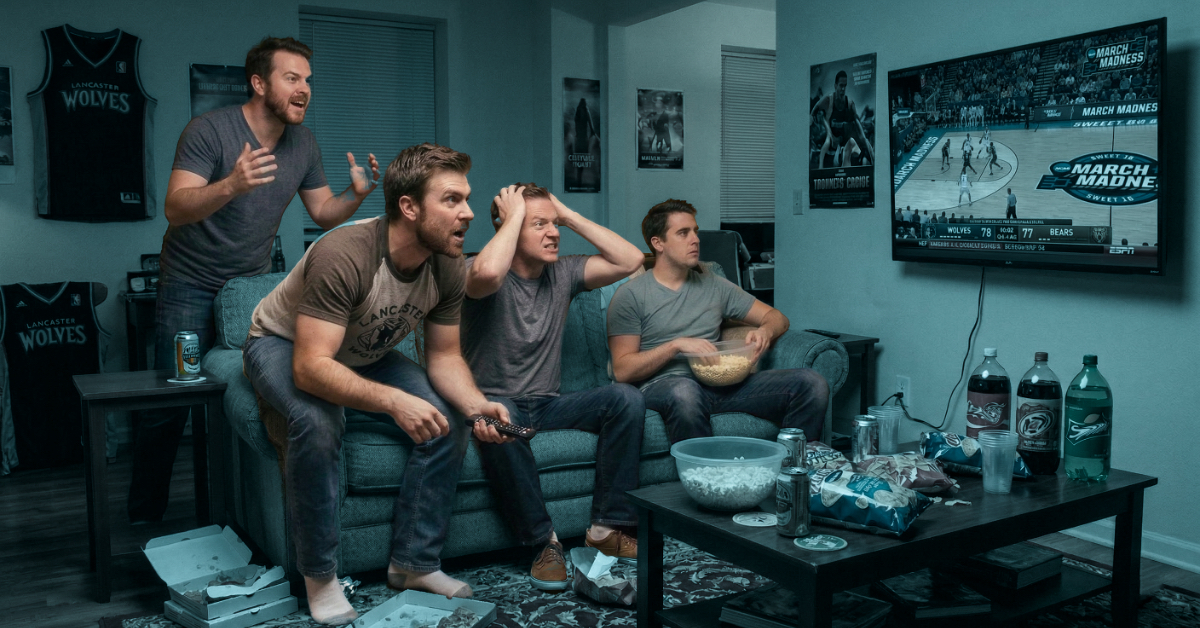
As we approach “Selection Sunday” this weekend, the sporting atmosphere across the country is shifting. Sunday’s event marks the official start of the NCAA March Madness Tournament, a four-week college basketball competition synonymous with excitement, competition, and community traditions.
For those in recovery, however, it also marks the beginning of a high-pressure window where gambling can quickly become a silent impediment to long-term stability; one that can morph into a brand-new version of the same old struggle.
When One Disorder Leads to Another
It is a common misconception that gambling is merely a “bad habit” or a lack of willpower.
Gambling disorder is a clinically recognized diagnosis. Just as an individual can have a substance use disorder, they can also develop a gambling disorder, which is described as a persistent and recurrent maladaptive behavior that disrupts personal, family, or vocational pursuits.
Because it doesn’t carry the same immediate physical symptoms as narcotics, it can be easy to overlook. Yet the same neurobiological pathways that respond to substances are often triggered by the “high” of a win or the adrenaline of a bet.
The $3 Billion Spectacle
The scale of modern sports betting is difficult to overstate. During the NCAA tournament, the atmosphere is electric, but for someone in recovery, it can also be predatory. Last year, the American Gaming Association (AGA) estimated that Americans would legally wager upwards of $3.1 billion on the tournament, up from $2.7 billion the year before. That represents a small percentage of the overall gambling picture, however. In 2023, the AGA estimated legal and illegal wagers on the tournament to exceed $15 billion.
This represents a massive cultural normalization of high-stakes risk.
As the tournament moves toward the Sweet 16 next week, the intensity shifts. The casual office brackets are often already busted, and the betting market narrows its focus to these final high-profile, high-tension games. For an individual in recovery who might be inclined to gamble, the next several weeks are a concentrated period where triggers are amplified across every screen and social conversation.
The Illusion of a “Safe” Outlet
In or out of recovery, gambling can begin as a seemingly harmless way to engage with friends or family. Whether it is a sports parlay, a trip to a casino, or a few scratch-off tickets, these activities are deeply woven into the fabric of social life.
The danger lies in the addictive behavior itself. Because gambling does not carry the same immediate physical stigma as narcotics, it can quickly become a “silent, secret” struggle that mirrors the consequences of the original disorder.
From the Sidelines to the Cycle
The progression can be subtle. It might start with a $5 bracket, an activity that is not only legal but aggressively marketed during every commercial break. It can quickly escalate, however, because it’s a manifestation of the same “all-or-nothing” thinking that drives substance use disorder, and it can easily latch onto to a new thrill like gambling.
The pattern is often familiar:
- The Social Phase: Engaging in sports betting because it feels like a way to belong or stay connected to “normal” social rhythms.
- The Covert Phase: Moving toward more isolated gambling, such as using mobile apps or visiting casinos alone.
- The Consequence Phase: Experiencing the same loss of control, financial strain, and emotional isolation that characterizes a struggle with substances.
Accountability in a High-Stakes Season
The proliferation of gambling opportunities during “tournament season” means the triggers are everywhere. They’re on our phones, in our social circles, and even at the grocery store. Sustaining recovery during these high-pressure moments requires the same tools used in the early days of the journey:
- Honesty and Transparency: Being truthful with mentors and support networks about the urge to gamble is a vital form of accountability.
- Recognizing the “Cross-Addiction”: Understanding that a “win” on a bet can be just as disruptive to a recovering brain as a relapse into substance use.
- Purposeful Connection: Choosing to spend time with those who encourage healthy boundaries rather than those who normalize high-risk behaviors.
Finding a Different Path
At The GateHouse, we believe that recovery is about restoring the human spirit in its entirety. That means looking at all behaviors that threaten an individual’s stability and peace of mind. While gambling may be legal and widely accepted, for many in our community, it is a path that leads back to the very darkness they worked so hard to leave behind.
If you find that the “harmless” bet is becoming an all-consuming thought, remember that you don’t have to navigate it alone.
The GateHouse is here for you, whether you need outpatient support, transitional living, or residential extended care programs. If you’re looking for help now, give us a call at 717-393-3215 or reach out to us today to get started.