
Open post Natasha’s Recovery Journey

From Chaos to Clarity: Natasha’s Recovery Journey

Natasha's Success Story with The GateHouseWhen Natasha McCall walked through the doors of The GateHouse the day after Christmas in 2018, she didn’t know she was entering the place that would transform her life. She had other plans … and those plans included palm trees and sunshine.

“Right when I got there, I told my counselor I was going to Florida,” she said. “I said coming to The GateHouse was just a temporary insurance thing.”

But the only program that accepted her was The GateHouse. And, as it turns out, that was exactly where she needed to be.

A Childhood in Turmoil

Natasha’s story begins in a whirlwind of instability.

By the time she entered kindergarten, she and her mother had moved 12 times. She was raised amid emotional chaos by a mom whose fear of the Rapture colored every corner of their world. Shuffled between her mother’s religious fervor and her churn of romantic relationships, Natasha was often left to her own devices.

Her first drink came at age 11, handed to her by a family member.

“I didn’t even really understand how it made me feel,” she said. “I just liked that I fit in. I didn’t feel self-conscious. I didn’t have to feel my feelings.”

What started with alcohol quickly escalated to hallucinogens, pills, and even heroin—all before she was even 16.

“It just kept progressing,” she said. “And it didn’t stop for 25 years.”

Motherhood at 15

Natasha and her sonAt just 15 years old, Natasha became a mother and immediately felt the weight of responsibility settle on her shoulders. She was desperate to provide some sense of stability for her newborn son.

“So, I did what any 15-year-old trying to build a family might think to do,” she said. “I got married.”

The marriage wasn’t to her child’s father, but to a 19-year-old man she barely knew. The relationship was rocky from the start. Both were struggling with substance use, and Natasha was still a child herself. The marriage lasted just six months.

“I had just turned 16 when we got married, and it ended that December,” she said. “It was like we were just playing house. We had no idea what we were doing.”

Still, Natasha tried to do the right thing. She got her GED, became a nurse’s aide at 17, and tried to raise her son with whatever stability she could muster.

Then, tragedy occurred. When her son was four, his biological father suddenly reappeared and took Natasha to court to gain visitation rights. On his very first overnight visit, the boy’s father abused him. It was a significant enough event that the man was arrested, convicted, and sentenced to 20 years in prison.

The experience was devastating for Natasha.

“I was already doing everything I could just to survive and be a good mom,” she said. “But that moment broke something in me. It was one of those things you don’t bounce back from—you just carry it differently.”

Transitioning to “Adulthood”

As she entered her 20s, Natasha did her best to cope. She kept working, raising her son, and searching for some semblance of order in her life. But the stability she longed for always seemed just out of reach.

Amid the chaos, she leaned on something she thought was safe: prescription medication.

“I figured if it was prescribed, it had to be okay,” she said. “I was taking Xanax, Valium, painkillers—whatever the doctor gave me. Every day.”

To the outside world, it looked like she was functioning. She had a steady job, paid the bills, and tried to keep life moving forward. But underneath it all, the pills were helping her maintain a fragile version of normal.

“I wasn’t partying,” she said. “I was surviving. But I can see now that I was abusing those meds. I just didn’t want to feel anything.”

By her 30s, things began to unravel. Her substance use disorder was no longer something she could control or conceal.

“I was getting high at work,” Natasha said. “I was missing events. Stealing from jobs. It was constant.”

Hitting Bottom

Even as her life spiraled, Natasha kept trying to “fix” things on her own. She swapped one substance for another, moved from place to place, all the while going on and off methadone.

A turning point came when her mother became gravely ill.

In the hospital for months, her mother’s health issues coincided with Natasha’s own deepening spiral. Sleeping in cars, staying with drug dealers, and ultimately losing a pregnancy due to her inability to stay clean, Natasha found herself homeless and alone in a Rutter’s parking lot.

“I had no money, no drugs, no one to call,” she said. “Weirdly, I had an NA book in my glovebox. I don’t know why. I really don’t. But I started reading.”

She picked up the phone and called Cove Forge. They had a bed. She went that same night.

“You have to understand—that never happens,” Natasha said. “You don’t just call a place like that and get a bed the same day. It honestly felt like divine intervention. Like something—someone—wanted me to live.”

The GateHouse Changes Everything

Although she had been to Cove Forge before, Natasha had never stayed through the program. But this time, something was different.

“I just knew I couldn’t go back to the life I was living,” she said.

Natasha and her friend from The GateHouseShe completed detox, stayed for rehab, and entered the partial program. Her next plan? Florida.

“My plan was to go recover in Boca Raton,” she said, laughing. “I thought I’d start fresh in the sunshine, maybe stay with my sister. That was the dream.”

But her insurance had other ideas—it required her to stay in Pennsylvania. She applied to several halfway houses across the state. All of them turned her down.

Except one.

“The GateHouse was the only place that said yes,” Natasha said. “And honestly, it was the best ‘no’ I ever got.”

When the doors of The GateHouse opened to her on that cold day in December, Natasha had no idea what she was walking into.

“I thought I’d just be living in a house, going to some meetings,” she said. “Instead, they handed me a chore list and told me I had to cook dinner for 27 women.”

A Moment of Truth

Despite the challenge, she leaned in.

“It was like everything I missed in childhood,” Natasha said. “There was a routine. I had responsibilities. But I was a part of something. I learned how to make my bed, do my own laundry, and be accountable.”

She stayed in Residential Extended Care for four months before progressing to Gatehouse Transitional Living. There, she found not just recovery—but clarity, purpose, and connection.

After her time at The GateHouse, Natasha moved to Columbia, PA, and things began to shift. She entered a relationship and moved in with a partner who was still actively using. The environment became toxic, and Natasha found herself slipping away from the practices that had kept her grounded.

The GateHouse alum Natasha“I wasn’t calling my sponsor. I wasn’t going to meetings,” she said. “I was still trying to hold things together, but I wasn’t doing the work.”

Eventually, she relapsed, and, probably due to her long period of abstinence, she overdosed.

Fortunately, her best friend, whom she had met during her time at The GateHouse, was also living with them at the time. Unlike Natasha and her partner, Natasha’s friend was still in recovery and wasn’t using. She was the one who stepped in.

“She gave me Narcan and did CPR,” Natasha said. “She saved my life.”

The moment jolted her back into focus.

“That was my jarring experience,” she said. “It shook me awake.”

Natasha and her partner moved to the City of Lancaster, but within a few weeks her partner moved out and Natasha recommitted fully to her recovery. She attended 90 meetings in 90 days, reconnected with her sponsor, and rebuilt the structure she had learned during her time at The GateHouse.

Building a New Life

Today, Natasha is thriving.

While she still lives in the same apartment she moved into after recovery, she works full-time in accounting and is pursuing her bachelor’s degree in behavioral science, with plans to earn a master’s in mental health counseling.

Most importantly, she’s become a pillar of strength in her family. Her son—now an adult—is in therapy and navigating his own healing journey. Her sister has reduced her drinking. Even her mother has become more open about addiction and recovery.

“I went from being the cautionary tale to being the inspiration,” Natasha said.

Looking Forward

Natasha plans to become a therapist whose focus areas are trauma and substance use disorder. She’s already begun to use her story to help others.

“Recovery gave me the space to grow, to go through phases, and to be loved through them,” she said. “I missed a lot growing up. Now I get to reclaim that.”


The GateHouse is here for you—whether you need outpatient support, transitional living, or residential extended care programs. If you’re looking for help now, give us a call at 717-393-3215 or reach out to us today to get started.


 

Open post "Bob Esque sharing his drug addiction recovery journey at The GateHouse Lancaster PA

Rewriting the Future: Bob’s Journey to Recovery

Bob Esque profileAt 32, Bob Esque lives a life that once felt unimaginable. He’s a small business owner, a proud father, and is preparing to marry the love of his life.
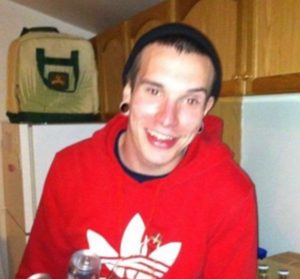
But behind his grounded, hopeful present lies a chaotic past filled with substance use, repeated incarcerations, and fractured relationships.

“I was willing to be anybody who wasn’t the old me,” Bob said. “As long as I didn’t become that guy again, I was all right.”


The Thirst of Adulthood

Bob’s story doesn’t begin in trauma. Raised in Chester County in what he described as a typical “functional” home, he saw alcohol as a symbol of adulthood.

“The men drank beer, the women drank wine,” he said. “That’s what we did.”

Eager to be seen as older and more mature, Bob had his first beer at age 11, handed to him by his father with a quiet “don’t tell your mother.”

That early exposure laid the groundwork for a long and dangerous relationship with alcohol. When he couldn’t get beer, he turned to marijuana. By his mid-teens, his substance use had deepened, and when he was around 15 or 16, his mother eventually kicked him out of their Chester County home. He spent about six months couch-surfing with friends, some whose parents turned a blind eye, others who normalized the behavior entirely.

“We’d skateboard, ride dirt bikes, play basketball, but eventually, all we did was drink,” he said. “Alcohol took over completely.”

At some point, though, Bob said he noticed that even the people he partied with were pulling away.

“Even some of my friends at the time, even they were pushing me away,” Bob said. “And I’m like, ‘Whoa. If he doesn’t even want anything to do with me, this has got to be pretty bad.'”

And yet, the chaos continued.


The Spiral from Teenager to Inmate

Bob before recovery with The GateHouseHis senior year of high school was marked by increasingly severe legal troubles, including marijuana possession charges and burglary. His first stint in Chester County Prison came during gym class, where officers came to his school, arrested him in front of everyone, and put him in handcuffs.

“I was terrified,” Bob said of his first experience with jail. “I’m in there with adults. I had only turned 18 two months ago … and now I’m in there with guys who had been doing this forever. ”

He was fortunate, however. Prosecutors allowed him to enter Chester County’s drug court program. But after a year and a half, he hadn’t even gotten through the first three-month benchmark.

“I was hanging out with the same people, going to the same house parties,” Bob said.” I was sober, but not in recovery. I was still very much in the game.”

At one point, he found himself in a high school classroom wearing an alcohol monitor that buzzed during lessons. Still, he finished school and earned his diploma—one of the few bright spots during this early dark period.


The Breaking Point

Bob’s turning point came not with a single catastrophic event, but through a series of mounting realizations. One moment of self-awareness—when he realized he had more experience with incarceration than a man twice his age—marked a shift in how he viewed his life trajectory.

“I was 20 years old and in Chester County Prison for like the seventh or eighth time,” he said. “One day, there’s, like, this 45-year-old man who’s in there for the first time. You could tell he wasn’t made for prison. And there I am, calming him down, telling him what’s going to happen next. It was bizarre. That’s when I first realized, ‘This is my life.’”

By the time he returned for his ninth incarceration before age 23, Bob was unraveling. When he was released in early December, he was lost, friendless, and hopeless. On Christmas Eve, desperate to escape his addiction but unable to trust himself on the outside, he walked into the state police barracks and asked to be arrested.

“They looked at me and said, ‘Kid, go home. It’s Christmas Eve,’” Bob recalled. “I actually wanted to go to jail, and they wouldn’t take me.”

It was one of the lowest points of his life. Lost, alone, and hopeless, not even alcohol could help him anymore, he said.

“It was still giving me all the physical effects, but none of the relief,” Bob said. “My only solution to life had stopped working.”

Finally, his probation officer called him to tell him the warrant he had been asking for had been issued. On January 31, 2016, he turned himself in for what would turn out to be his last stretch in prison.

Those first few weeks in jail were his worst. He had given up alcohol, his substance of choice, and his abstinence only exacerbated the experience. He hallucinated, couldn’t differentiate dreams from reality, and trembled through withdrawal. As scary as it was, he was resolute and determined.

“Finally, I felt safe … from myself.”


The GateHouse

Bob at The GateHouseAfter seven months in jail and a 90-day stay at Colonial House rehab in York, Bob’s counselor mentioned a place called The GateHouse in Lititz.

“I said, anywhere but home,” he recalled. “Send me anywhere but back to what I’m used to.”

He arrived at The GateHouse and quickly immersed himself in the program.

“The in-house meetings, the counseling, the structure—I knew I needed it,” he said. “Even the packet work everyone hates—I did it because I knew it was necessary.”

He completed his three-month stay and transitioned into The GateHouse’s Recovery Environment Integration program (which is now GateHouse Transitional Living) for four more months.

That structure, and the support it provided, helped Bob rebuild his life with intention.


Rebuilding and Giving Back

Today, Bob owns a lawn care business, shares a home with his fiancée, and is a dedicated father. He still works occasional hours at the job he first held while at The GateHouse, as well—proof of the relationships and trust he’s built over time.

“I was that guy in jail who knew the routine, telling others what would happen next,” he said. “Now, I go back to The GateHouse—not as a resident, but to offer jobs to people who are living there and working the program. Three of them are working for me right now.”

Bob’s relationships have transformed, too. Once considered unreliable, he’s now known for his integrity.

“I’ve been told I’m really good at setting boundaries,” he said with a chuckle. “But mostly, I just try to be honest. That honesty brings the right people into my life.”

He’s also made peace with his past. Though his mother still chooses not to be in contact, his father, still quiet and cautious, calls him secretly every year on his birthday.

“He cares,” Bob said. “He just doesn’t want to fight. And I get that now.”


A Future Worth Fighting For

For Bob, success isn’t just about staying on the recovery path; it’s staying open to growth, new experiences, and meaningful relationships. He’s living proof that recovery is possible and that with the right support and structure, anyone can reclaim their life.

“I still don’t know who I am fully,” he admitted. “But I now know who I’m not—and that’s enough.”


The GateHouse is here for you, whether you need outpatient support, transitional living, or residential extended care programs. If you’re looking for help now, give us a call at 717-393-3215 or reach out to us today to get started.


Open post yannick-before-The-GateHouse, Yannick-Harris-sponsor, Yannick-Harris-Mother-Kids

From Structure to Freedom: Yannick’s Recovery Journey

Yannick Harris’s path to recovery wasn’t one he chose—at least not initially.

“I definitely wasn’t at a point where I was ready to stop,” Yannick said, recalling his mindset when his journey began. “I didn’t really know what rehab was, other than commercials of Passages Malibu in California. I think I probably kind of looked at it like it would be a vacation, honestly.”

Today, Yannick is celebrating his tenth year of sobriety and has come full circle. He now works as a counselor at The GateHouse—the very place that helped him establish his foundation in recovery. But his journey there was anything but straightforward.


The Unexpected Intervention

Yannick’s struggle with substances began in high school with alcohol. By college, his drinking had “taken off,” as he described it, and he got involved in legal trouble—primarily for selling drugs. His substance use deepened over time, eventually leading to harder drugs.

It was his mother who first confronted him about his addiction.

Yannick Harris before The GateHouse“I was probably about 40 pounds underweight,” Yannick said. “I was always really close with my mom since I was a kid, so she just asked me what was going on, and something told me to be honest with her.”

His mother responded first with tough love, telling him he couldn’t be around her house if he was using. But shortly after, she called with a different approach: she wanted him to go to rehab. Through connections with his uncle in Florida, arrangements were made for Yannick to enter treatment.

Unfortunately, the Florida experience quickly fell apart. What had been described as a solid treatment plan turned out to be disorganized and unavailable. After arriving in Florida, Yannick discovered there wasn’t actually a bed reserved for him. Though he eventually found a detox center, against medical advice, Yannick left after just three days. He wound up using again on the streets before flying back home to Pennsylvania.

What Yannick didn’t know was that his mother had other plans when he returned from his brief, unsuccessful stint in Florida.

“My mom had arranged for me to go to rehab without me knowing,” he said. “So, I get on the plane back to PA, land at the Lehigh Valley International Airport, and get into the car. I guess I fell asleep because when I woke up, there was this old man there to take me to rehab.”


Finding Structure at The GateHouse

After 103 days at the Conewago Snyder treatment center in Beavertown, PA and 25 days in a partial program at Cove Forge in Williamsburg, PA, Yannick finally arrived at The GateHouse. Still not fully invested in recovery, he was initially drawn to the practical aspects of the program.

“The most enticing thing you hear is that you could start working, you could take family passes, and things like that,” Yannick said. “I wasn’t even necessarily looking at it as, ‘I’m going to continue to work on myself internally.’ I was more so like, ‘Okay, I get one step closer to being done with all this stuff.'”

Despite his initial reluctance, the structure at The GateHouse became the foundation of Yannick’s recovery. Two elements stood out to him: learning healthy communication through The GateHouse’s “pull-up system” and getting involved in Alcoholics Anonymous (AA).

“The biggest thing was getting involved in AA, which I actually procrastinated with in a lot of ways until right before it was time for me to go,” he said.


The Turning Point

Yannick Harris AwardYannick’s true recovery journey didn’t begin until he was nearly ready to leave the residential program at The GateHouse. With just two weeks left before moving to a transitional living house, he still hadn’t secured a sponsor or a job—both requirements for the next phase.

“The whole clinical team met with me and pretty much said, ‘Listen, you’re self-sabotaging,'” Yannick recalled. His counselor issued an ultimatum: get a sponsor that night or risk losing his place in the recovery house.

This moment of accountability became the catalyst for Yannick’s genuine recovery. He asked someone who had been giving him rides to meetings to be his sponsor—someone he already had a relationship with.

“That sponsor I called daily,” Yannick said. “I started doing step work. I would say that was the start of my recovery, even though I already had four or five months abstinent at that point.”


Building a New Life

Yannick's mother and kids

Yannick stayed in the transitional living program at The GateHouse for 15 months, following the structure that had been established and continuing his involvement with AA. His approach was simple but effective.

“I just followed the rules,” he said. “And because I followed the rules, one day I woke up and I was a different person. It’s kind of hard to explain how I really got there, other than I followed the rules and got connected to AA as a result.”

After leaving transitional living, Yannick secured his own apartment and continued working at Our House Cafe, where he had risen to a management position. Eventually, his personal life stabilized as well—he reunited with the mother of his children for a time and regained custody of his kids, who had been living with his mother for several years.

Though his relationship eventually ended, Yannick maintains shared custody of his children, now ages 12 and 11, alternating weeks with their mother.


Coming Full Circle

Yannick’s professional journey led him first to The Retreat, where he progressed from Clinical Aide to Patient Care Coordinator (Case Manager) and ultimately to Behavioral Health Technician Manager for his final three years there. During much of this time, he simultaneously worked part-time at The GateHouse—a position he held for four years before focusing solely on his role at The Retreat.

Yannick as Fear from Inside OutWhen The Retreat unexpectedly closed last year, Yannick found himself drawn back to The GateHouse, where he now works as a counselor—helping others on the same journey he once traveled.

“The deciding factor was knowing the people there,” Yannick said. “I knew the person who would be my supervisor. I knew several people who were still there… they’re great people, and I love them all. It was just an easy decision.”

While continuing his work at The GateHouse, Yannick is also pursuing further education at Millersville University, building on the associate degree in social services he earned from HACC. Though he’s certain about his passion for social work, he’s considering moving beyond direct client work to focus on policy and grant writing.

“I would actually like to get involved more on the macro level,” he said.

Reflecting on his journey, Yannick acknowledges the many people who helped him along the way—from his mother who set firm boundaries, to the staff who held him accountable, to the AA members who showed up offering rides to meetings.

For Yannick, what began as merely following rules to avoid homelessness transformed into a life of meaning, connection, and service.

“Sometimes recovery finds you,” Yannick said, “even when you’re not looking for it.”


The GateHouse is here for you, whether you need outpatient support, transitional living, or residential extended care programs. If you’re looking for help now, give us a call at 717-393-3215 or reach out to us today to get started.


Scroll to top