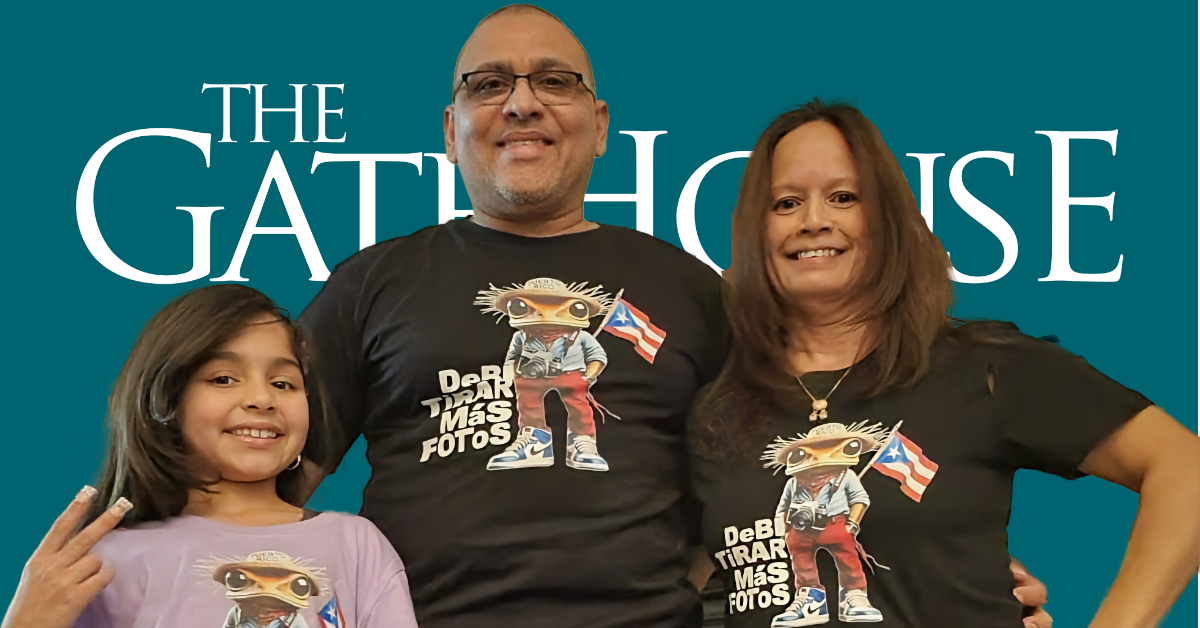
Open post Nelson Caldero, 18 years in addiction recovery, now a certified drug counselor in Lancaster PA

From the Streets to Service: Nelson Caldero’s Journey to Recovery

Nelson profile pictureGrowing up in Puerto Rico, Nelson Caldero seemed destined for success.

Bright, disciplined, and surrounded by strong family values, all the pieces were in place. His parents, now in their eighties, didn’t drink or smoke, and Nelson was raised in the Catholic Church.

“My family taught me right from wrong,” he said. “We weren’t even allowed to have tattoos.”

After graduating high school in 1990, Nelson went to college and earned an associate’s degree in accounting. But despite his degree and the structure his family provided, his environment told a different story. Nelson lived in a housing project where crime and drug dealing were part of everyday life; where the people who commanded respect were the ones who broke the rules.

“In the projects, it wasn’t about being a bad person,” Nelson explained. “It was about survival … and wanting more.”

Despite his family’s love and support, by his late teens, Nelson was already immersed in Puerto Rico’s drug culture. He drove his own car, worked for major dealers, and was surrounded by people chasing fast money.

“I wasn’t using then,” he said. “But I was deep in the lifestyle.”


A Move to the Mainland
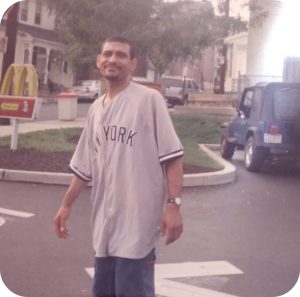
Nelson older pictureIn his early twenties, Nelson traveled to Bethlehem, Pennsylvania, to attend a funeral for someone connected to the life he’d known in Puerto Rico. It was his first time leaving the island, and the trip changed everything, he said. As soon as he arrived, he saw opportunities everywhere and decided to stay.

But that decision would also put him on a dangerous path.

“When I came to Bethlehem, I started working at a tire shop that was also laundering money,” Nelson said. “Eventually, I made the poor decision to start selling heroin with one of my coworkers. My mentality back then was all about making money.”

The lifestyle escalated quickly. His first brush with jail was for possession while dealing drugs. He bailed himself out quickly, though, and was back on the street in no time. He was even offered Accelerated Rehabilitative Disposition (ARD), a pre-trial diversion program for first-time nonviolent offenders. Successful participation in the program could have eventually led to an expungement of his criminal record.

It wasn’t long, however, before Nelson got further involved in drug trafficking and was arrested after a shooting incident. Although he wasn’t the one who pulled the trigger, Nelson was one of three people trying to collect money from another group and was witnessed carrying a gun. This time, his case wasn’t treated so lightly. He was given a high bail, which led to his first real time in jail.

“That’s when I went to general population for the first time,” he said. “When I came out, I told myself I was a criminal now. That’s how I started using heroin for the first time, right here in Pennsylvania.”


The Spiral and the Fall

What began as experimentation soon turned into a daily battle.

“From that day on, that was it,” he said. “I was in and out of prison—Northampton County, Lehigh County—it never stopped.”

Hoping to escape the chaos, Nelson returned to Puerto Rico, where his family believed a change of scenery might help. “But when I went back, it was even worse,” he said. “Heroin was cheaper and easier to find. Two weeks later, I was using again. And then I became homeless.”

Eventually, a friend from the old neighborhood recognized his struggle and sent him to a program that transferred people from Puerto Rico to Christian rehabilitation centers in the U.S. Nelson ended up in New Jersey, but he wasn’t ready. “I found a way to use even in the program,” he said. “They kicked me out.”

From there, he called his brother in Bethlehem, who sent him money to come back. “He told me the rules: no using, no drinking. Three weeks later, I relapsed again.”


Rock Bottom and the Turning Point

By his late twenties, Nelson had lost nearly everything: his marriage, his health, and his family’s trust.

“Every time my brother helped me, I hurt him,” he said. “I would steal from him to buy drugs. It got to the point where I had no place to live and no one to call.”

In 2007, he found himself back in jail, this time in Northampton County. But during his court hearing, something shifted. “I told the judge, ‘If you send me to treatment, I promise you’ll never see me in this court again,’” he said. “And I meant it.”

The judge listened. Nelson was sent to a residential treatment program in Lancaster. “That was my last chance,” he said. “And I knew it.”

His clean date of November 2, 2007, marks the day he entered that program. When he completed treatment, his counselor offered him a spot at The GateHouse in Lancaster. “I’d never heard of it before,” Nelson said. “But on January 2, 2008, I walked through those doors. And everything started to change.”


Finding a New Way to Live

At first, Nelson wasn’t sure he’d fit in.

“There were only two Spanish guys there, and after the first week, the other one got discharged,” he recalled. “I thought nobody would like me. But from the first day, everyone treated me with respect. They treated me like I was somebody. I needed that.” That respect became the foundation of his recovery. Nelson began working the 12 Steps, attending meetings, and building a new community.

“I decided I wasn’t going back to Bethlehem,” he said. “I was going to start over here.” He found a sponsor (the same one he still has today), got a job downtown, and started rebuilding his life.

“The GateHouse gave me more than a bed,” Nelson said. “It gave me purpose.”


From Resident to Role Model
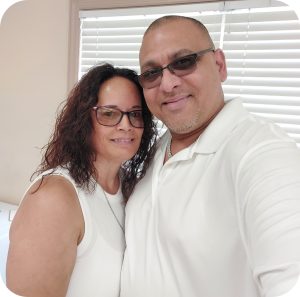
Nelson and partnerNelson stayed the course. He finished outpatient care, enrolled in classes at HACC, and eventually earned his associate degree in social work. Later, he was accepted into Drexel University’s Behavioral Health Counseling program, a process that took determination and three separate appeals after his application was initially denied due to his old criminal record.

“I didn’t give up,” he said. “I even wrote a letter to the doctor who created the program. I told him, ‘That charge doesn’t define who I am today.’ They finally accepted me and even paid for my books the first semester.”

Every Saturday for nearly two years, Nelson drove from Lancaster to Philadelphia for classes, never missing a session.

“I only missed one day because of snow. It took me two hours to drive there and two to drive back. But I wanted it,” he said. “I wanted it so bad.”

He graduated with honors and later earned his CADC (Certified Alcohol and Drug Counselor) credential.

For 16 years, Nelson worked at Nuestra Clínica Residencial in Lancaster, where he rose to Facility Director of the halfway house before accepting a new role at Blueprints for Addiction Recovery. Today, he serves as an Embedded Case Manager, helping clients navigate treatment and county funding through the Lancaster County Drug and Alcohol Commission.


A Life Rebuilt with a Legacy of Service
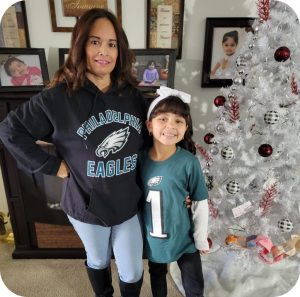
Nelson's daughter and partnerRecovery established Nelson’s career but also rebuilt his family.

After gaining full custody of his daughter when she was two and a half, he built his life around being a father.

“I learned how to braid hair, pack lunches, and take her to school,” he said with a smile. “She’s 10 now, and everything I do, I do for her.”

Nelson also found love again.

“I’ve been in a relationship for five years,” he said. “She loves my daughter like her own.”

Even now, he remains deeply connected to the recovery community. He serves as a coordinator for a Spanish-language NA convention and volunteers as an area service representative for the Lancaster region.

“Somebody helped me,” he said. “Now it’s my turn to help others.”


Eighteen Years of Addiction Recovery and Counting
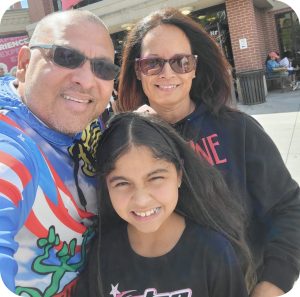
Nelson's familyThis November marks 18 years since Nelson’s last use. It’s a milestone he doesn’t take lightly.

“I remember what it felt like to have nothing,” he said. “Today, I have a home, a family, a career, and peace. That’s what recovery gives you. Peace.”

When asked what advice he shares with others walking a similar path, Nelson doesn’t hesitate.

“Don’t give up,” he said. “You’re not going to understand everything right away. But keep showing up. One day, the miracle will happen. And when it does, your life will make sense again.”


The GateHouse is Central Pennsylvania’s leader in accredited recovery care, helping individuals rebuild their lives and rediscover the strength of the human spirit. Whether you need outpatient support, transitional living, or residential extended care programs, give us a call at 717-393-3215 or contact us to get started.


Open post Jason Grady, former paramedic and first responder, in opioid addiction recovery at The GateHouse Lancaster PA

Finding Purpose Through Pain: Jason’s Recovery Journey

Jason GradyJason Grady’s path to recovery started with a hamburger.

At 28, Jason Grady was living his calling as a paramedic and firefighter near Pittsburgh, saving lives and building a future. A seemingly minor incident – a broken tooth from biting into a hamburger – nearly destroyed everything.

“Being a medic, the ER doc doped me up pretty good,” Jason recalled. What followed was a descent into addiction that would span more than a decade.

“It’s almost like falling in love,” he said. “Before I knew it, it was pills every day, and then heroin, and then selling drugs.”

The irony wasn’t lost on Jason. His medical expertise, which had once saved lives, now enabled his deepening addiction.

“Being a paramedic, I was very well-versed with needles,” he said. “That was a horrible decision. After that, there was no turning back.”


A Decade of Struggle

Jason Grady, The GateHouse success storyFor ten years, Jason’s life became an exhausting cycle of attempts at recovery followed by devastating relapses. He cycled through nine treatment programs and multiple incarcerations. Each time, he thought he could get back on track, only to find himself pulled back into addiction’s grip.

The pain of withdrawal in jail – “cold turkey, you’re gonna grin and bear it” – became a familiar torment.

“They basically stick you in a corner where you can puke and s–t yourself,” he said bluntly. “It’s a horrible experience.”

But even after enduring withdrawal and serving nine months behind bars, Jason would find himself using again within weeks of release.

As the cycle of addiction, jail, and relapse continued, Jason’s family life became horribly fractured. He lost a brother to alcoholism. He lost a cousin to an overdose. Today, at 41, he fears he may lose another cousin to addiction.

“I keep trying, but …” he said, trailing off.

Perhaps the most difficult part of Jason’s journey has been the toll those years took on his relationships with his three children: a 19-year-old daughter he hasn’t spoken to in a decade, an 11-year-old son still struggling to forgive him, and a 4-year-old son he’s working to stay connected with. The weight of these broken relationships haunts him, especially when he recalls the painful event in 2023 that finally shattered his world: an overdose … with his youngest son downstairs.

Faced with how close he’d come to leaving his young son fatherless, Jason finally found the motivation that had eluded him through all his previous attempts at recovery. This time would have to be different.

“That was the catalyst,” he said. “Somewhere between White Deer Run and The GateHouse, I told myself that nothing else mattered anymore because if I didn’t do this, I was gonna die.”


Finding The GateHouse

Jason had heard about The GateHouse during previous treatment attempts – it was known as “the best halfway house in the state,” he said. He applied, but the waiting list was long. Through what he now sees as divine intervention, a paperwork error by his case manager led to his immediate placement at The GateHouse instead of another intended destination.

“That first week, I was still skeptical,” Jason said. “I was thinking, ‘I don’t know if I want to be here.’ But the people were so patient – not just the staff, but the other guys in the house, too. I met a lot of really good people in there, some of whom I’m still in contact with.”

The GateHouse’s structured environment gave Jason something he hadn’t found in his previous recovery attempts: time to catch his breath and heal.

“That first month at the GateHouse gave me a lot of time to sit and think,” he explained. “At some point, I realized going home is no longer an option because going home is what I did every time and every time, I wound up back where I started.”


Jason Grady with his partner

A New Path Forward

During his stint at The GateHouse, Jason met his sponsor, who worked at Blueprints, where Jason now serves as a Program Counselor.

“He’s so gung-ho, and he’s so down to earth that I couldn’t help but just dive in,” Jason said. “Between him and his alternative therapy modality, everything just clicked.”

Today, Jason is pursuing his degree in social work through the University of Phoenix and is working to turn his past struggles into a foundation for helping others. Through an innovative UOPX program called Sophia, “I’ve done half my undergrad in months, which is wonderful,” he said.

His relationship with his four-year-old son is healing, and he’s building a new life with his girlfriend, whom he met while in recovery.

While reconciliation with his older children remains uncertain, Jason approaches it with hard-earned wisdom: “There was a lot of harm done back then. And so, it’s going to be on their terms … If they want to, I’m here. If not, I understand.”


Living in the Present

“If the program taught me anything, it’s that the further away from your fundamentals you get, the worse off you are,” Jason said. “It doesn’t matter if you got 10 years clean or 10 days – staying close to the things that kept you clean early on will keep you clean later on.”

When asked about the future, Jason said he approaches it in the context of his recovery journey.

“I know I’m gonna finish school; keep working in the field because I love it,” he said. “Where I’m gonna end up? What I’m gonna do? That’s still up in the air. The program taught me the past is full of resentment and the future is full of anxiety. Stay in the present and live for today.”

His focus now is giving back what was given to him and being the best version of himself so he can help others find their way. He especially enjoys running in-house meetings and doing one-on-one interventions with clients, drawing from his own experiences to help others navigate their recovery journey.

“At the end of the day, I wouldn’t be here if I hadn’t gotten there,” Jason said. “The GateHouse was life-changing for me, just like it is for lots of other people. It’s beautiful, and I support it 110 percent.”


Jason Grady and friends


During this year’s Extraordinary Give on November 22, please join us in supporting The GateHouse. Your contribution can be the turning point in someone’s journey from addiction to recovery, just as The GateHouse was for Jason. Visit our Extraordinary Give page to make a contribution that will help rebuild lives, restore families, and strengthen our community.


Open post Hallie's Journey to Recovery

From Survival to Revival: Hallie’s Journey to Recovery

At age 41, Hallie Franceschi never thought she’d be here.

After decades trapped in addiction, multiple incarcerations, and losing custody of her children, she now wakes up each morning in her Mountville home with something she never had before: choices.

“I never thought that I would ever be here,” Hallie said, her voice filled with a combination of relief and disbelief. “The fact that I get to wake up today and decide what I want to do—and I can change my mind tomorrow if I want—I can do that now.”

But the path to this point was anything but straight.

Early Descent

Hallie’s struggle with addiction began early—around age 11 or 12. There was no gradual progression, no slow descent into substance use. As she put it, “It was off to the races as soon as I started.”

While her peers experimented with alcohol or marijuana, Hallie quickly gravitated toward harder substances … pills, heroin, “anything I could get my hands on,” she said. Even then, she felt like an outsider—someone missing what everyone else seemed to have.

“I could be in a room of my peers and just not feel part of the group,” Hallie said. “I always just felt like an alien, like I was missing something that everybody else was getting.”

Growing up in what she describes as a “good house” with working parents—her mother a nurse, her father a mental health services worker—Hallie was “the last person anybody would have thought would grow up and be a heroin addict.” Her parents’ divorce during her early teens created plenty of emotional turmoil, but it also created something else, too: opportunities for her addiction to flourish under decreased supervision.

The Spiral Continues

Despite her struggles with substances, Hallie managed to excel academically, taking accelerated classes and graduating high school. She even earned acceptance to the University of Pittsburgh, where she planned to study marketing and advertising design. But the pull of addictive substances proved stronger than her academic ambitions.

“I wasn’t able to show up for any of it,” she said. “Could I pass things? Could I write papers? Yes. I could kind of white-knuckle my way through it. But I could only go so far with that before professors were like, ‘All right, I don’t know what you’re doing, but you can’t do this.'”

Years of Survival

What followed was decades of what Hallie described as “living like an animal.” Her world shrank to a singular focus: drugs—how to get them and what she needed to do to obtain them. Everything else fell away.

The cost was devastating. She lost custody of her three children. Multiple arrests led to years of incarceration. Despite attempts to enter recovery and maintain sobriety through various programs, nothing stuck.

“I had completely accepted that this is what my life had become,” she said.

The cycle of substance abuse led to increasingly dangerous situations. She faced multiple DUIs, assaults, and other charges.

“Chaos was just kind of my jam,” she said, reflecting on years spent cycling through jail stays, failed attempts at stability, and deeper descents into addiction.

Rock Bottom and Beyond

Even during periods of apparent stability—maintaining jobs as an executive assistant or in commercial cleaning—her addiction always won.

“Who wants to show up for work?” she remembered thinking. “I want to go out and do drugs.”

The pattern seemed unbreakable until her final incarceration. This time, the court offered early release on one condition: she had to go to rehab. This ultimatum led her to Colonial House in York, PA, where she spent three months. It was there she first heard about The GateHouse and faced a fork in the road.

“I still had a home to go back to,” Hallie said, “but I knew if I did, it was just going to be the same thing. So, I took a leap of faith, listened to a couple of people, and ended up at The GateHouse.”

Finding Her Way at The GateHouse

When Hallie arrived at The GateHouse in May 2021, she said she was “a shell of a person.”

“I had nothing. I didn’t even have myself,” she recalls. “I wasn’t capable of holding a job. My clothes were disgusting. I had just spent the last 25 years surviving.”

The GateHouse became more than a recovery program for Hallie—it became a bridge back to humanity. Staff members helped her navigate the basics of modern life that had passed her by during years of substance abuse and incarceration. Simple things like electronic payments at stores or using ride-sharing apps were foreign concepts.

“They took me out and just showed me the world with this whole different mindset,” Hallie said. “They showed me that I can fit in somewhere without the use of drugs.”

Learning to Live Again

The program introduced Hallie to activities she’d never experienced before—bowling, miniature golf, movies with friends.

“These were not things that I did,” she said. “Just participating with other people that were staying straight and didn’t want to get high anymore, it was strange. Getting through all of that weird, awkward stuff was uncomfortable, but I did it.”

Through The GateHouse’s programs, Hallie progressed from Residential Extended Care to GateHouse Transitional Living. Each step built upon the last, helping her develop crucial life skills and self-confidence.

“They showed me how to do things for myself,” she said. “Nobody did anything for me. They just showed me what I could do. That empowerment—I can’t even explain how much that meant to me.”

Building a New Life

Today, Hallie has her own place, shares her home with a roommate she met at The GateHouse, and works at an aerospace engineering company. More importantly, she’s exploring new career possibilities that align with her desire to give back to others. She’s even reconnected with one of her children.

Her goals have evolved as she’s grown in recovery.

“Things that I thought I wanted, I no longer want,” she said. “I’m trying to find a job, a career that is more authentic to who I am and what I can contribute. That’s become super important to me.”

The Power of Support

As Lancaster County’s Extraordinary Give approaches, Hallie’s story exemplifies why The GateHouse is so vital. The transformation from survival to revival doesn’t happen in isolation—it requires support, structure, and a community that believes in second chances.

“Everybody deserves a chance at success,” Hallie said. “If I can do this, and if my life can change because of a place like GateHouse, it can happen for anybody. I’m not special. There are so many people just needing that little bit of extra encouragement, those little glimmers of hope that their lives can get better.”

When asked how it feels to be at this point in her life, Hallie paused for a moment and then smiled.

“It’s nice to get to a place where I feel like I can just breathe,” she said. “I can trust in the fact that, because I put the work in, I can figure it all out without burning my life to the ground. That is a wonderful feeling.”


Hallie (right) and her roommate in their new apartment after Hallie’s graduation from GateHouse Transitional Living.


During this year’s Extraordinary Give, please join us in ‘Giving Extra’ to help community members like Hallie continue their journey to recovery and build healthy, meaningful lives. Your support helps to provide a foundation that makes transformation possible. Visit our Extraordinary Give page to bookmark our page and make a contribution on Nov. 22.


Scroll to top